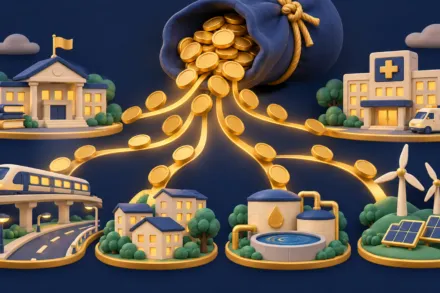
European Union negotiators have reached a deal on the EU budget for 2027, the Council announced on November 11, 2026. It sets €199.7 billion in new spending commitments and €211.5 billion in payments, subject to formal approval.
The European Commission says payments will rise as regional investment programs reach full speed. The agreement covers the final year of the EU’s 2021–2027 spending framework, with funding for farming, research, migration and support for Ukraine.
What the EU budget totals mean
The Council’s budget guide explains why the two sums differ. Commitments are promises to fund work, such as a grant or contract. Payments are cash paid during the year, including bills from earlier promises.
So the two sums do not add up to one spending total. For example, a grant agreed in one year may be paid out over several years. As a result, cash needs grow as work moves ahead, the Commission says.
For scale, the Council puts payments at 1.05% of the EU’s gross national income. Eurostat says this measure adds up the income of an economy’s residents. It adjusts domestic output for income flowing to and from the rest of the world.
Where EU budget commitments go
The Council’s figures below show how much goes to each budget heading. Cohesion, resilience and values, together with natural resources and environment, account for about two-thirds of commitments. That share is a Likiweeks calculation from the Council’s table.
EU budget agreement: 2027 commitments by heading
Source: Council of the EU
Data as of: 2026-11-11
Cohesion, resilience and values is the largest heading, followed by natural resources and environment.
| Budget heading | Commitments |
|---|---|
| Cohesion, resilience and values | 75,764.9 EUR million |
| Natural resources and environment | 57,113.4 EUR million |
| Single market, innovation and digital | 22,007.5 EUR million |
| Neighbourhood and the world | 15,537.9 EUR million |
| European public administration | 13,869.7 EUR million |
| Special instruments | 5,874.1 EUR million |
| Migration and border management | 5,811.6 EUR million |
| Security and defence | 3,078.5 EUR million |
| Ukraine support loan | 650 EUR million |
For example, the Commission’s breakdown puts €53.8 billion toward the Common Agricultural Policy and €44 billion toward regional development and cohesion. Its research program Horizon Europe receives €12.8 billion, while Erasmus+ receives €4.5 billion for education and mobility opportunities.
Ukraine’s loan and its financing costs
The €650 million line for the Ukraine support loan covers a specific cost. The Commission says it covers debt service costs for 2027. It is not the amount lent to Ukraine.
The Commission describes that loan as a €90 billion package covering military assistance and budget support across 2026 and 2027. Likiweeks has covered the proposal to allocate €45 billion of the Ukraine support loan for 2027.
A separate decision on the next seven years
However, the 2027 deal does not settle the next long-term framework for 2028–2034. The Council’s guide says that framework sets spending limits across several years. To adopt it, all member states in the Council must agree. The European Parliament must also give its consent.
In other words, the annual EU budget funds one year within an agreed framework. The next framework, by contrast, sets the limits for the years that follow, according to the Council.
Formal votes still to come
Both institutions must approve the EU budget agreement within 14 days, the Council says. It expects to endorse the deal on November 23. The Commission says Parliament’s final plenary vote is scheduled for November 24, 2026.
Sources: European Commission announcement, European Commission budget Q&A, Council budget agreement, Council budget guide, Eurostat