A CubeSat laser link has joined Greece’s ERMIS-3 with a ground station in Holomondas, the European Space Agency (ESA) says. ESA described the result on November 2, 2026. The firm that made the laser gear, Astrolight, had shared the news in October.
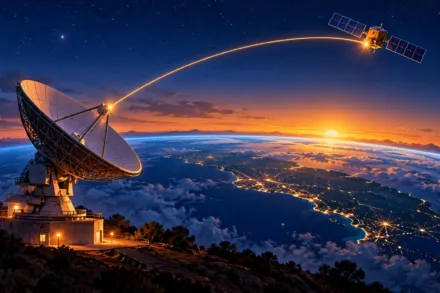
ESA says the test shows how small spacecraft can aim light beams to send data to Earth. Both ends must point at each other and track their motion to keep the link.
How the CubeSat laser link works
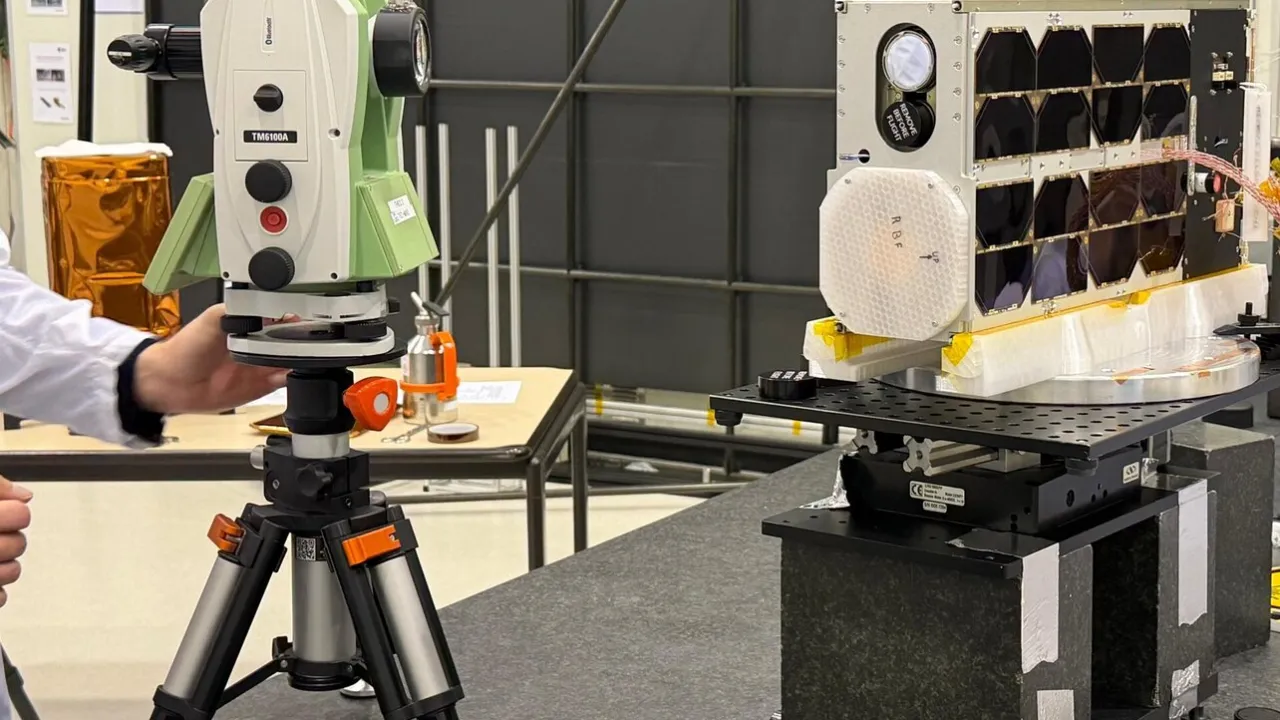
ERMIS-3 is an 8U CubeSat developed by the National and Kapodistrian University of Athens, according to ESA. It carries Astrolight’s ATLAS-1 laser gear. On Earth, it links to a station built by Aristotle University of Thessaloniki.
Unlike a radio link, it uses a thin beam of light. ESA says both ends must find and track the beam as the craft moves through space. Clouds can block it, while shifts in the air can weaken the signal.
Firm reports two links each day
Astrolight announced the link on October 8. The firm says its team ran both ends from Lithuania, without staff at the ground site. It moved from the first link to routine use within a week.
Astrolight says it was sending data at one gigabit per second, with two planned links each day. That is the speed the firm reports from use. Its estimate of a higher possible speed is not a test result.
The firm says the gear could regain a lost link in less than 10 milliseconds. Once set up, both ends worked on their own. Staff did not need to steer them through each pass, according to Astrolight.
Tests and future plans
ESA says ERMIS-3 launched on March 30, 2026, alongside ERMIS-1 and ERMIS-2. ESA helped test the craft and align its laser gear at its center in the Netherlands.
Astrolight says it is building a new laser ground station in Greenland with ESA. It also plans new gear for use in space. Those plans are separate from the results it reports for ERMIS-3.
Sources: ESA, Astrolight