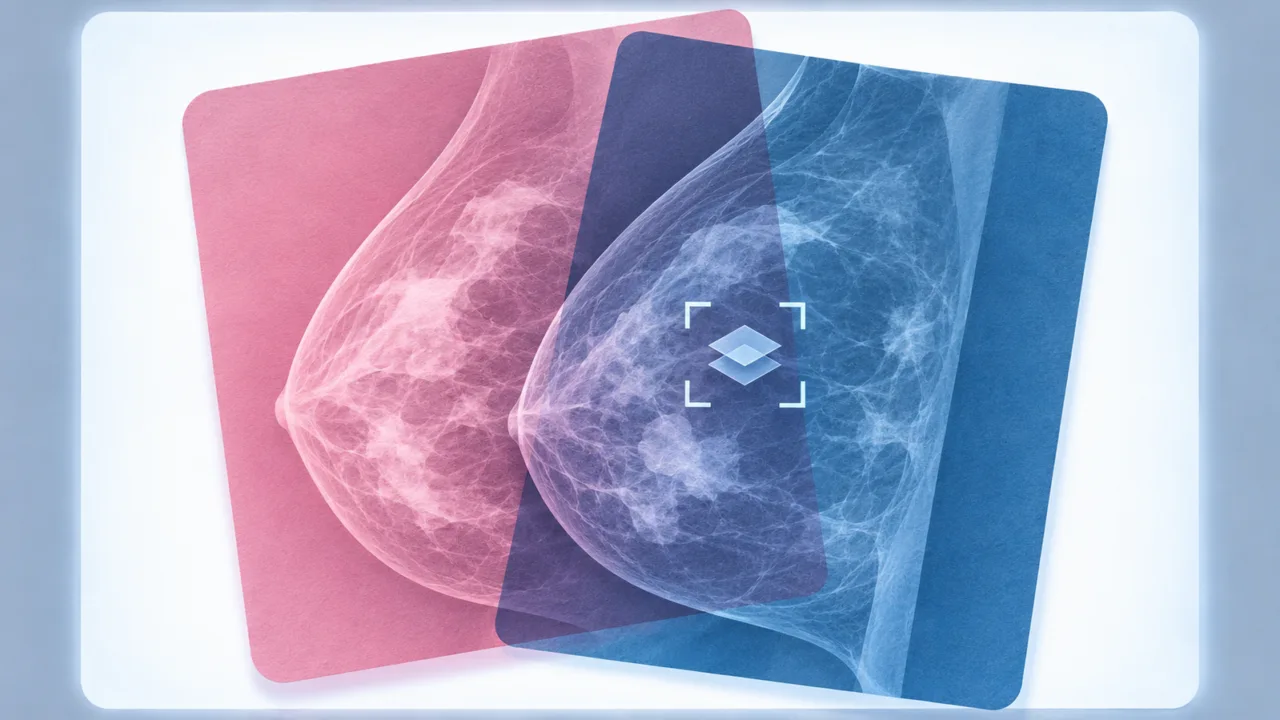
Women in Cambridgeshire were receiving the first invitations to the UK’s EDITH trial by November 23, 2026, Cambridge University Hospitals said. Co-led with the University of Warwick, the trial tests whether artificial intelligence (AI) can help specialists read breast X-rays.
The National Health Service (NHS) invites women aged 50 to 70 for a mammogram, a breast X-ray, every three years. Two specialists read each scan even though fewer than 1% show cancer, the hospital trust said. The National Institute for Health and Care Research funds the study, which aims to enroll 660,000 women at about 30 centers, the trial registry says. The study tests whether AI finds more cancers and tracks how many women staff call back for extra checks.
How the EDITH trial assigns mammograms
EDITH stands for Early Detection using Information Technology in Health. Rather than picking individual women, the study assigns each clinic day at random to one of three reading groups, the registry says. Women have their X-rays taken and get results as usual, Warwick’s participant guide says, so only the image review changes.
| Reading step | Usual screening | AI as second reader | AI reads first |
|---|---|---|---|
| First reader | A screening specialist | A screening specialist | AI rates how likely the images are to show cancer. |
| Second check | A second specialist reads the images. | AI checks for signs the first reader may have missed. | One specialist reads lower-risk images. Two read higher-risk images. |
Source: University of Warwick, EDITH participant information
A screening specialist checks every mammogram across all three groups.
When a center joins, two specialists may read scans as usual for a short time while viewing the software’s output, Warwick’s guide says. If readers disagree on calling someone back, another specialist or a panel reviews the images and decides, the registry says. In the group where AI reads first, a very high score always triggers that review. Two specialists also read any scan the software cannot process.
What a screening invitation means
Joining is optional, and opting out does not affect a woman’s routine mammogram, the University of Warwick’s guide says. Women can call or email the center listed in their invitation, or tell staff at the appointment. Two specialists will then read the images without AI.
If a woman opts out after her visit, AI may already have read her scan. Researchers can still exclude her data before they analyze and publish the results. In England, the National Data Opt-out excludes a woman’s data from EDITH’s results, but AI can still read her scan. Women who want human-only review must tell their screening center.
How researchers will judge the results
The trial registry sets two primary benchmarks for each AI group against standard screening. Researchers will count at least one extra cancer per 1,000 women screened as a meaningful gain. They also set a limit of at most two extra callbacks per 1,000 women. Most women called back for further tests do not have cancer, Warwick’s guide says.
NHS England figures put those margins in context. In 2024–25, the program screened 2.15 million women aged 45 and over and referred 73,451, or 3.4%, for assessment. Screening found cancer in 19,291 women in that group, a rate of 9.0 cases per 1,000 screened.
The registry says researchers will also track staff workload and compare results by age, ethnicity and breast density. Follow-up through screening and cancer records will help the team count cancers found between routine screens. The UK Department of Health and Social Care told Parliament it expects the EDITH trial to report in 2030.
Sources: Cambridge University Hospitals, ISRCTN trial registry, University of Warwick participant guide, University of Cambridge, NIHR Cambridge, NHS England, UK Parliament