A Caltech space robot has assembled a section of an antenna support frame in orbit, the university and DARPA said. They shared the result on November 5, 2026. The test explores ways to build large structures in space.
However, the test did not produce a finished antenna. According to Caltech, the robot built a third frame section after pushing out two sections built on Earth. The team is unlikely to finish the full structure before its mission ends in December.
How the Caltech space robot builds
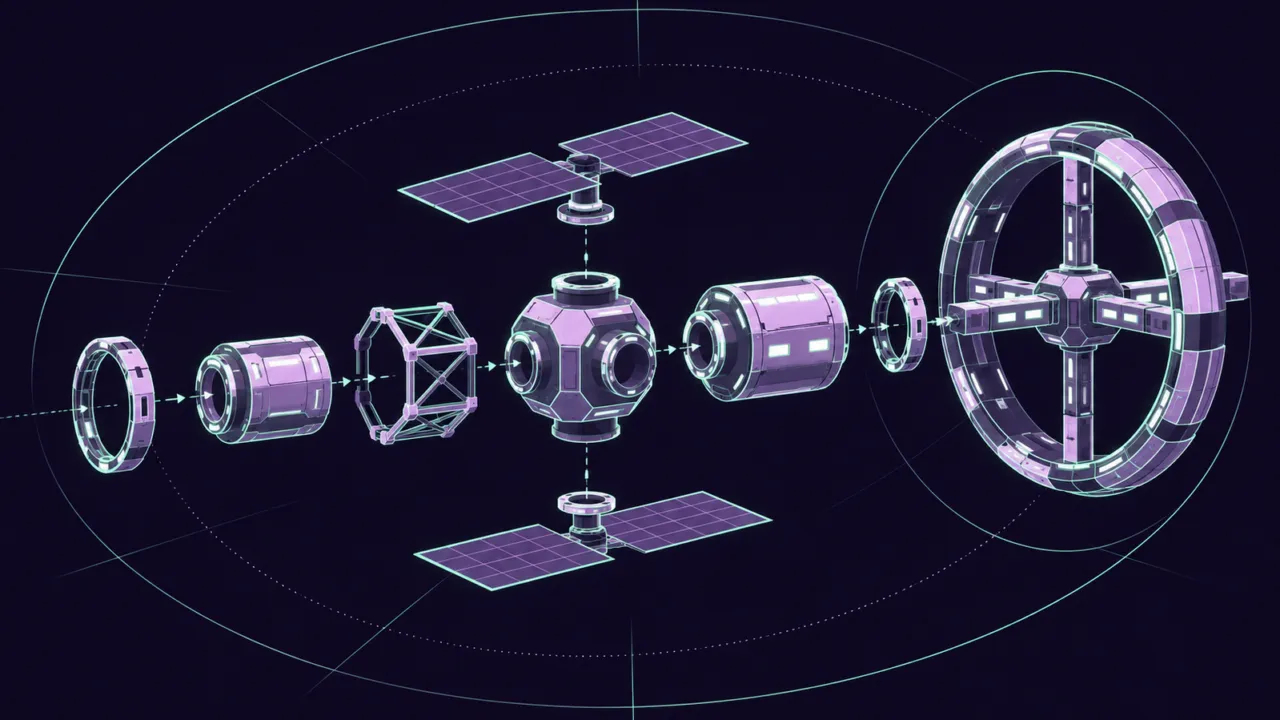
Caltech calls the experiment Autonomous In-Space Tensioned Reflector Assembly, or ASTRA. Its planned antenna is 1.4 meters across. Caltech said the robot picks up tubes and joints from stores beside it. It joins these parts into frame sections called bays.
DARPA, the Defense Advanced Research Projects Agency, funded the work through its NOM4D space manufacturing program. The agency said the robot moves along three straight axes. It joins the frame parts and adds a thin mesh that reflects signals. This tests a way to build future antennas.
Caltech said ground teams sent commands and checked the results in photos from space. They also used a spare copy in their lab to recreate faults and test fixes. The Caltech space robot therefore still needed help from Earth.
Building beyond a rocket’s size limits
DARPA said structures built on Earth must fit inside a rocket, even when folded. Another method sends large parts on separate flights for people to join. The agency wants to send parts into space and build structures where they will be used.
For example, DARPA said this method could suit large, lightweight structures such as solar arrays and radio antennas. These are potential uses, not working systems built by this test. The agency said the test shows that the idea can work.
What the test leaves unfinished
ASTRA launched on March 30, 2026, aboard the SpaceX Transporter-16 mission, according to Caltech. It operates on Momentus’s Vigoride 7 vehicle. DARPA said Momentus supplied power, radio links, photos and other support.
Caltech said the team now needs to make its design simpler and improve it. DARPA also plans a separate NOM4D experiment from the University of Illinois Urbana-Champaign aboard the International Space Station. That project will test how to make strong composite structures in space, rather than join finished parts.