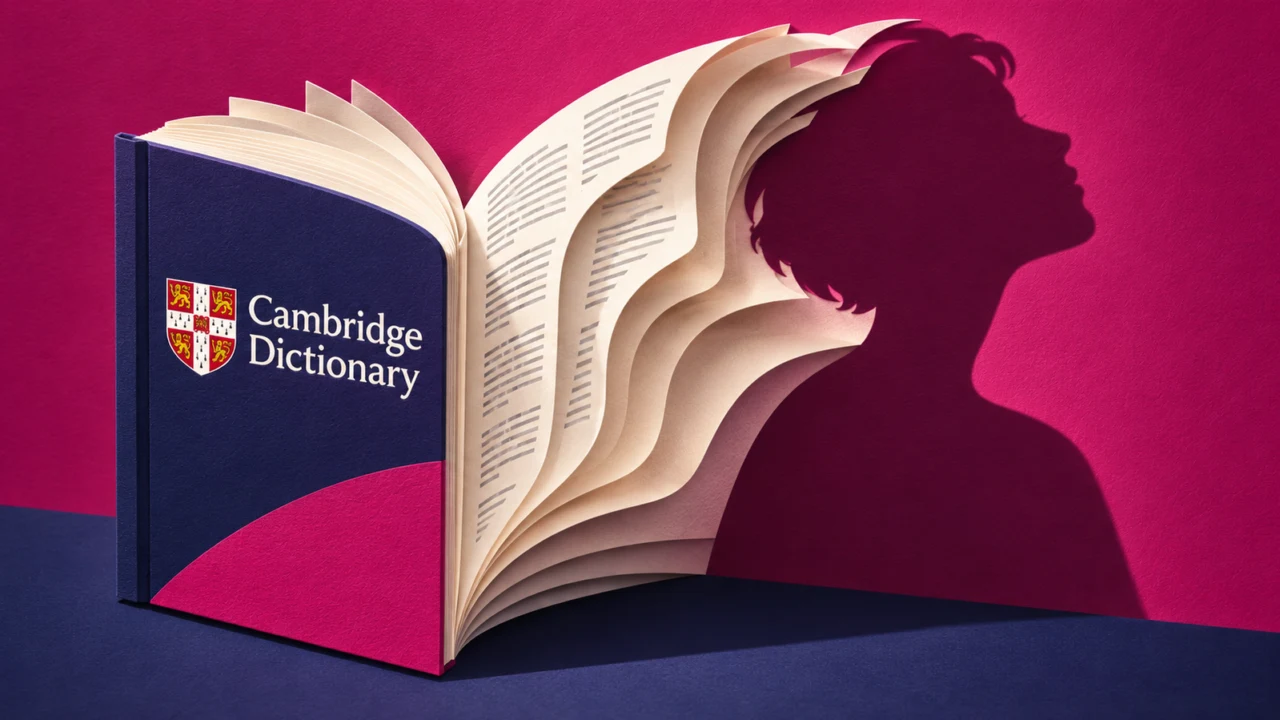
Cambridge Dictionary named “human” its word of the year on November 17, 2026. The editors chose a word most people know. They say artificial intelligence is changing how people draw the line between a person and a machine.
The adjective dates to the 1450s and comes from the Latin word “humanus,” according to the Associated Press. The editors saw a fresh reason to use an old word. It gives people a way to say what sets them apart from machines.
What Cambridge Dictionary means by ‘human’
The dictionary’s definition includes the feelings and faults that people share. It distinguishes people from gods and animals as well as machines. In that sense, calling a mistake human draws on the same meaning as calling a response human.
Colin McIntosh, a dictionary editor, said people worry about letting AI do their thinking. That worry has led some to ask how much they rely on it. He pointed to mathematicians and teachers of young children as examples.
Two other contenders show the range of the debate
Two other words made the list, according to the Associated Press: “agent” and “analogue.” In the AI context, an agent can make decisions and act on its own. Analogue describes things or experiences that work without digital technology.
Cambridge took a different route into the subject in 2023. Its choice then was “hallucinate,” a verb used for an AI system producing false information. The 2026 choice puts the focus on the person using the system.
Sources: University of Cambridge, Cambridge University Press & Assessment, Associated Press