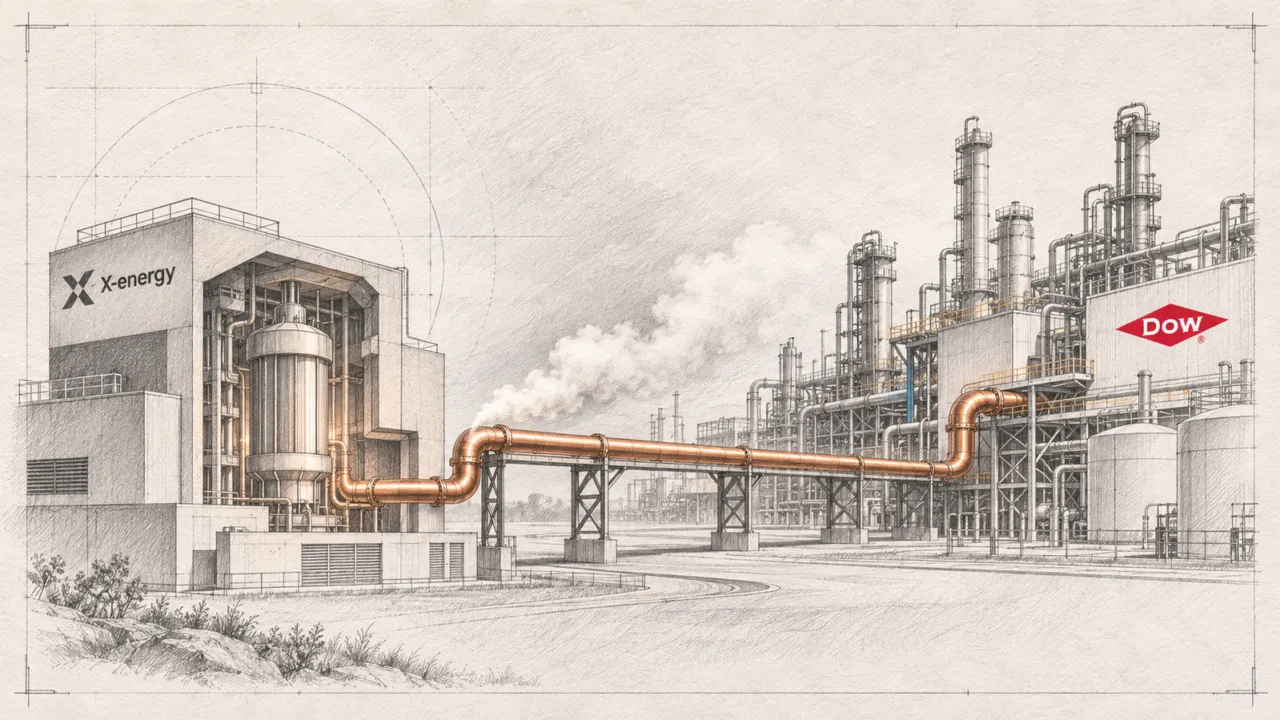
A Texas reactor permit lets Long Mott Energy build four reactors at Dow’s Seadrift plant on the Gulf Coast. The U.S. Nuclear Regulatory Commission issued the permit on November 9, 2026, and says their main job would be to supply high-temperature steam to the plant, with surplus electricity going to the grid.
Dow owns Long Mott Energy and is developing the project with reactor designer X-energy. Dow says the equipment that now supplies steam and power is near the end of its life. The company has yet to decide whether to build.
How the Texas reactor permit fits the plant
The U.S. Department of Energy says each of the four Xe-100 units can deliver up to 80 megawatts of electricity or 200 megawatts of heat. Those figures describe two ways to use the same energy. A chemical plant can use heat directly as steam or turn it into electricity.
The department also supports the project through its Advanced Reactor Demonstration Program. It says Long Mott is the first advanced nuclear facility to win a construction permit at a U.S. industrial site.
What happens before the reactors can run
The Nuclear Regulatory Commission says it finished its safety review in October 2026. Under the Texas reactor permit, Long Mott Energy can build the plant. Before it can load fuel or run the reactors, it must get a second license.
Some nearby residents have raised questions about what happens to that fuel after use. Diane Wilson, director of San Antonio Bay Waterkeeper, told Inside Climate News that spent fuel would stay at the site. Her group challenged the permit application in 2025, and the commission dismissed the challenges, the outlet reported.
Dow says it still has to finish engineering and design work and put the project before its board. If the board approves it, the company says construction could start before 2030, with the first steam and power in the early 2030s.
Sources: NRC, Dow, US Department of Energy, Inside Climate News via The Texas Tribune